
The products that succeed are built around user behaviour, practical constraints, manufacturing reality and a clear commercial position. Whether you are developing a cabin case, wheeled duffle, travel backpack or specialist equipment bag, good luggage design comes from making the right decisions early.
At Mouse, we see the strongest luggage products emerge when brands look beyond the idea itself and focus on how the product will perform in the real world. For brands developing performance-led carry products, our experience in outdoor product design brings a practical understanding of how luggage needs to perform in demanding environments.
The best luggage design starts by understanding the journey the product needs to support. A short-haul cabin bag, a family travel case, an outdoor expedition pack and a protective flight bag all have very different requirements. The more specific the use case, the stronger the product definition becomes.
Rather than designing for a broad market, the most successful luggage products are shaped around a clear user, a focused environment and a structured set of demands. That clarity guides decisions on access, size, structure, weight and materials long before styling is finalised.
One of the biggest mistakes in luggage product design is underestimating the small details. Zips are a good example. The right zip specification, supplier and placement can make a major difference to durability and user experience. The same goes for pullers, handles, wheel systems and buckles. These are the touchpoints users rely on most, and they are often the first places where poor design shows up.
Thoughtful luggage design also means solving practical problems that are easy to overlook. In a wheelchair flight case we developed for ProMatch, we designed a dedicated internal pocket for loose wheel axles so they would not get lost or damage the bag in transit. It is a small detail, but one that improves the product significantly in use.

Visual identity matters in luggage. It helps create recognition, communicates quality and builds loyalty over time. But in strong luggage brands, that identity is usually earned through a combination of aesthetics, performance and consistency across a product range. Tuff Bag are a great example of designing a range of luggage from the ground up keeping function and aesthetics aligned.
Customers may buy initially on looks, but they stay with a brand when the product works well. Material choice, proportion, silhouette, hardware and finish all play a role in making a luggage product feel distinctive. The key is to make those choices in a way that supports the function of the bag rather than competing with it.


Luggage products are exposed to repeated stress, impact and abrasion. Zips, wheels, handles and buckles all need to be specified with care, because they are usually the first components to fail if the product is not properly engineered.
Material selection is equally important. In the ProMatch wheelchair flight case, we selected an HDPE base because of its ability to absorb impact and recover from deformation. That matters in environments such as airport baggage handling, where products are exposed to forces that are difficult to predict but impossible to ignore.
That is especially true in technical luggage design, where access, durability and construction all need to work together under real use conditions.
Outdoor luggage often needs a different level of design thinking because it is not simply there to transport gear. It becomes part of the user’s performance within the activity.
Take ski touring from hut to hut. In that environment, a bag is not just luggage. It is a safety equipment carry system, a hydration and fuelling station, and a platform for organising essential kit in changing conditions. It may also need to carry skis, poles or an ice axe, while working with technical clothing and allowing freedom of movement over long days.
This is what makes outdoor luggage design so specialist. The product has to support the journey in a far more active way.
Internal organisation can add real value, but only when it is disciplined. Too many compartments create clutter. Too few create frustration. The best luggage products are organised around access, not just storage. What does the user need quickly? What needs to stay protected? What should remain separate? These decisions shape how useful a bag feels in practice.
Dimensions matter just as much. Cabin compliance, transport restrictions, doorway widths and carrying comfort can all affect whether a product works properly. Good luggage design finds the balance between maximising usable space and staying within the constraints of the journey.
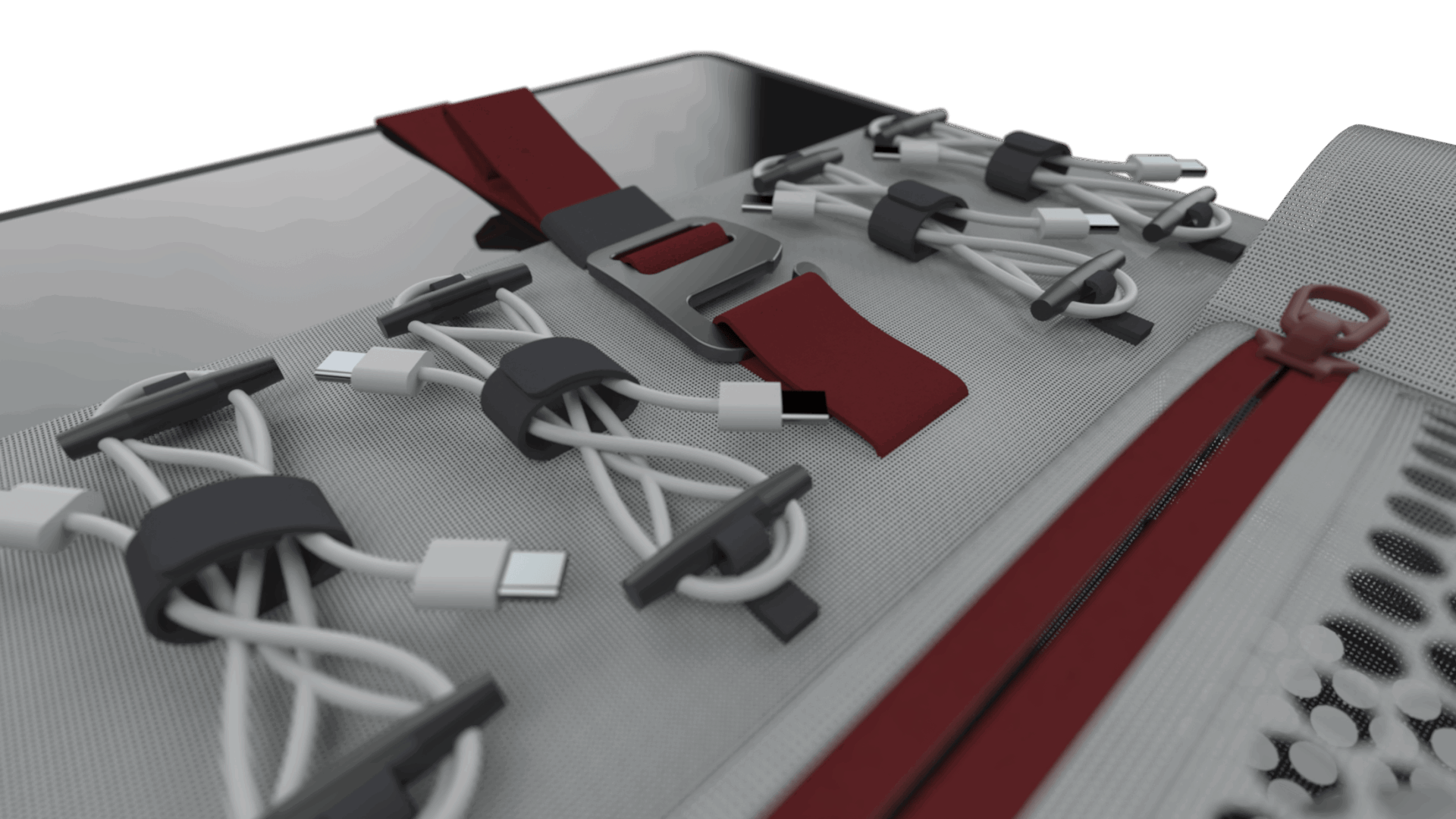
Luggage cannot be fully understood on screen. CAD is useful, but prototyping reveals what drawings cannot: how a bag carries, how a strap sits, how access works, and whether the product actually feels right in use. Even simple stitched mock-ups can uncover issues early and improve the final design significantly. We have written more about this in prototyping and iteration, where early testing helps resolve product issues before they become expensive to fix.
The prototyping process also needs to connect with manufacturing. Construction methods, stitch types, component choices and factory capability all influence whether a concept can be produced successfully. This is where experience matters. A strong luggage product is not just well designed; it is designed to be made properly.

A successful luggage product has to do more than look appealing. It needs to perform for the user, align with the market, and stand up to real use over time. That takes more than a good idea. It takes a design process that understands the journey, the materials, the construction and the commercial reality.
At Mouse, we approach luggage design by combining user-centred thinking with practical product development and a clear understanding of how luggage is actually made and used. That is what turns an idea into a product people want to buy, use and trust.
Speak to Mouse about design, prototyping and production support. Start the conversation at mouse.design


