
Product design focuses on solving user problems through functionality and experience. Industrial design is about crafting the physical form and manufacturability of a product. At Mouse Design, we combine both to deliver comprehensive, production ready products.
Product design is the process of identifying user needs and creating solutions through functional and aesthetic design. It includes early-stage idea generation, prototyping, user testing, and preparing for product launch.
Product Design Key Characteristics:
Industrial design focuses on the physical form, ergonomics, and manufacturing feasibility of a product. It brings artistic and technical skill together to ensure that a product looks great and can be manufactured efficiently.
Industrial Design Key Characteristics:
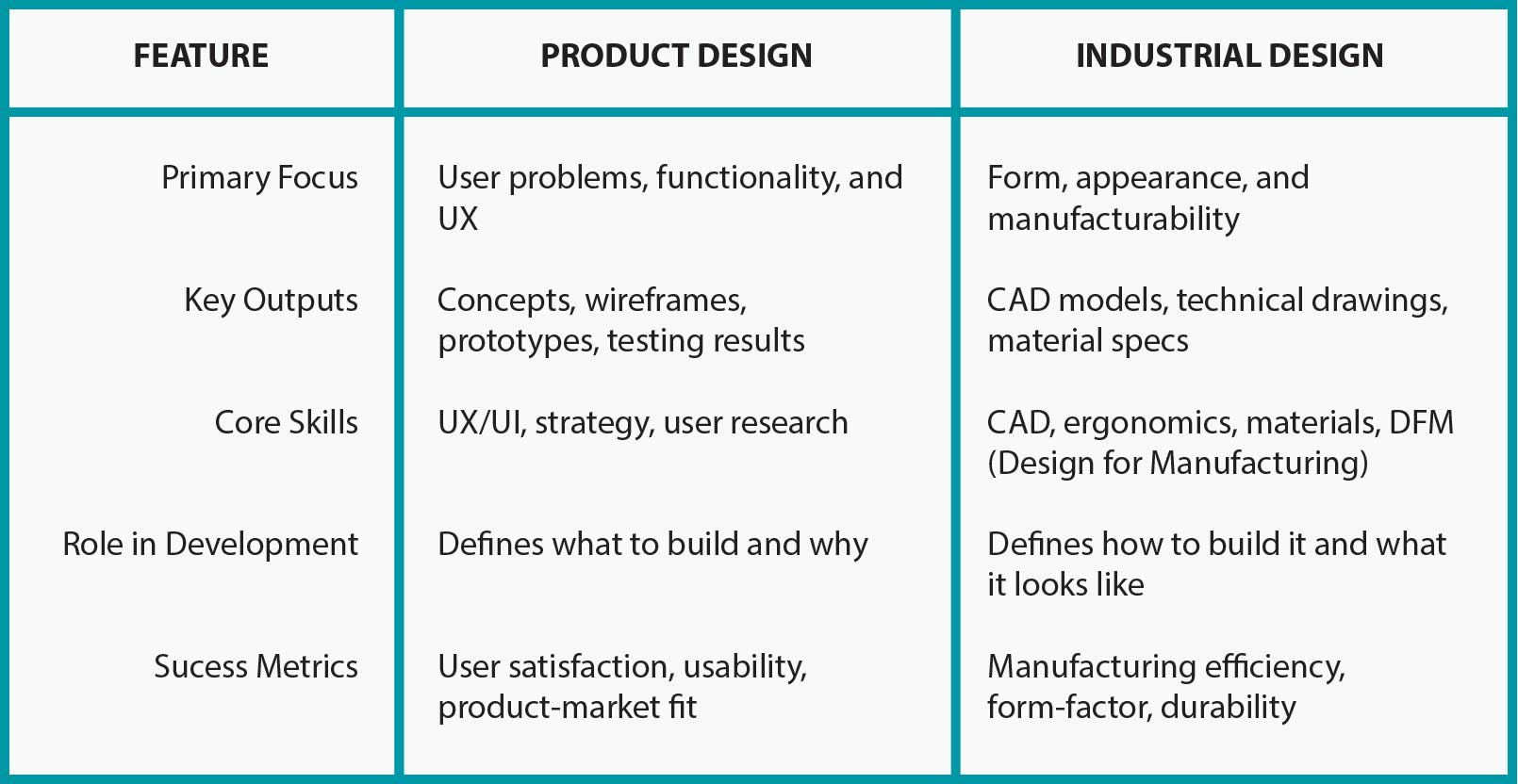
Although distinct, product design and industrial design are interdependent. They must work in sync to deliver a successful product.
Example:
This synergy ensures the product is:
If you’re developing a physical product, ignoring either discipline can result in:
By partnering with a team that understands both, you reduce risk and increase the chances of a successful product launch.
At Mouse Design, we provide end-to-end physical product development that includes both disciplines:
Whether you’re building a consumer product, medical device, or IoT hardware, our team bridges form and function.
What is the main difference between product design and industrial design?
Product design focuses on solving user problems and ensuring functionality, while industrial design focuses on the product’s physical form, appearance, and manufacturability.
Can a product designer do industrial design work?
Some overlap exists, but industrial design typically requires specialised skills like 3D CAD modelling, materials engineering, and knowledge of manufacturing processes.
Yes—if you’re developing a physical product, both disciplines are essential. One defines what the product is and how it solves user needs; the other defines how it looks and how it’s made.
The journey of the roller banner began not with a sketch of a beautiful object, but with a simple question: “How can we make this work better?” This product design mindset led to a series of detailed prototyping, to perfect the mechanics. From the swappable graphics to the flawless tensioning system—ensuring the banner was truly the most user friendly on the market. Only then did the project’s focus shift. The industrial design challenge was to create a body that not only housed the complex internals but looked like a single, sculpted object. The team engineered an internal honeycomb structure to handle the forces from the large internal spring, all while keeping the outer shell a smooth, single piece. The end result is a product that’s as beautiful as it is brilliant, proving that form and function don’t have to be mutually exclusive.


Are you developing a physical product and need support across both product design and industrial design?


