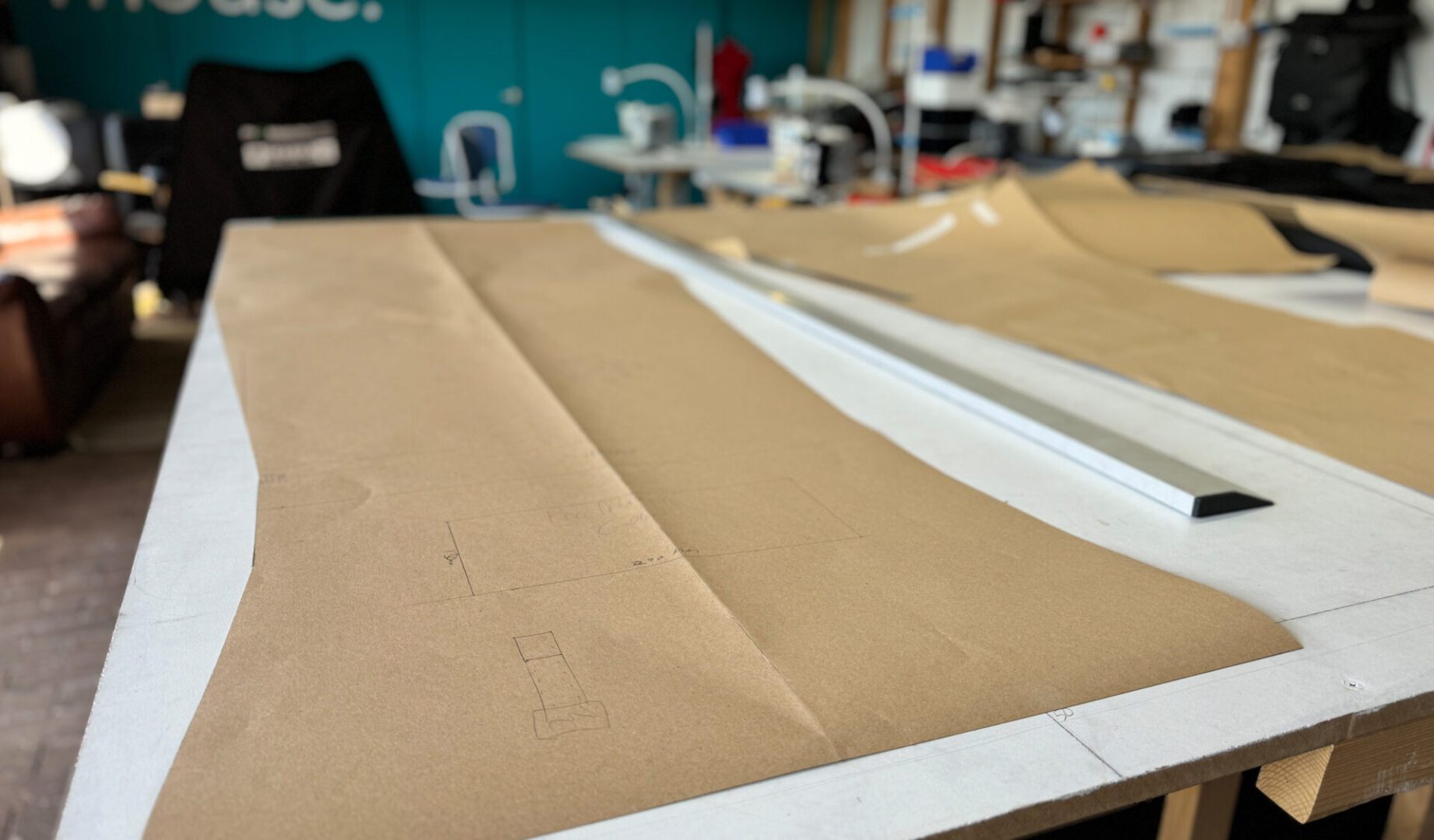
The answer lies in the often-overlooked art and science of fabric pattern development. These patterns, in essence, provide the blueprints for soft goods, functioning as the architects that define all aspects of a fabric product, from fit to function.
In this article, we’ll look at the importance of the pattern process, particularly for designers and businesses wanting to develop new products.
Okay, what are patterns? Well, patterns are the blueprints that create and define a fabric product or garment. They are fundamental design documents. Imagine a builder trying to build a house without any drawings. They would start and very quickly run into problems about how big it was going to be, where to place the walls, the footings, how many floors it should have, where the windows should be, where the doors should be. All of these bits of information are contained in the blueprints, which are usually drawn by an architect. Patterns are very similar. They dictate the product size, the shape, the fit, the overall structure, and how it’s constructed. All these things make a huge difference on a product’s performance, a product’s cost, its longevity, its sustainability, and many other factors.

So, how do you create patterns? That’s where the design team’s role comes in. Designers can develop soft goods using a selection of hand processes and digital design processes. But what’s critical with any soft goods design is that the designer is involved in the pattern making. They don’t have to necessarily do it all, but they have to have a fundamental understanding of what different styles of pattern drafting allow you to do and how to do it. One of the beauties of designing soft goods is that it’s a very hands-on approach. Through some fantastic digital tools, we’ve seen great steps forward in how precise patterns can be, but it’s not until they come into the real world that you get a feel for how those plans have evolved and worked. This process is iterative, and often when going to create a set of patterns, refinement and prototyping happens several times. This allows you to test your ideas while considering aspects such as sheet utilisation.
For those seeking UK sewing services and reliable sample making services, at Mouse we have a skilled team who can draw up patterns and create prototypes all located in Chester, in the UK. You might be surprised to learn that we handle all pattern and sample creation right here in Chester, UK. During the challenges of the pandemic, we doubled down on our UK sewing and pattern making facilities, and haven’t looked back. We’re proud to have worked with exceptional brands and athletes, including the Sail GP team and Paralympic medallists Greg Slade, alongside many other valued clients.
Pattern development impacts product functionality significantly. For example, it might be that you’re trying to create a running garment that must move in a certain way. It’s got to allow the arms freedom of movement through certain angles, but it’s got to be well fitted to stop it bouncing around and rubbing. It also needs to have durability considered for areas of high wear, namely around contact points on the sides of your arms, the sides of your torso, rucksack contact points. All this can be achieved through good pattern making. Pattern making is also a fantastic tool to be able to minimise material waste, which helps the environment, but it also allows a reduction in the amount of material needed, therefore a cheaper price for the product. Careful consideration of how best to get efficient designs from a piece of fabric, and using as much as possible of it, can make a huge impact both economically and environmentally. If you are looking for apparel design or bag design services, this level of functional pattern knowledge is vital.

So, is pattern making an art or a science? Well, it’s actually a blend of technical skills and creative vision that takes a certain amount of science-based knowledge of garment construction, but also a flair for art and aesthetics to create something new and beautiful. Pattern making is not just about making it work; it’s about making it look good too. We use both traditional hand pattern techniques to develop paper templates that we use to pin together and create quick samples, alongside our digital pattern making process. Whether that’s 2D or 3D, we work with a blend of software to help create better designs that fit together and perform better. Digitisation in pattern making has certainly seen huge leaps and bounds in recent years. But it’s still always critical to get your hands onto the product and create a prototype to test out those digital ideas. For technical design and CAD pattern making, this balance of art and science is essential.
Let’s look at material considerations. When you’re talking about patterns, it’s important to think about the type of material that you’re creating the pattern for. Different types of material have different adjustments needed in the patterns, from stretch Lycra, to woven wools to laminated technical fabrics. They all have different ways they operate; they have a bias, and they have to be cut and patterned in a certain orientation. You need to account for fabric grain, shrinkage that might occur, and other material properties that impact the overall performance. Fabric selection is absolutely critical and goes hand in hand with pattern design. For those seeking textile design and manufacturing expertise, understanding these material nuances is key.

One of the key aspects Mouse has invested in is prototype and sample making. Many of our clients have found this to be one of the most valuable parts of what we deliver in soft goods design. We can quickly, through a series of industrial sewing machines, create real-life prototypes to validate the pattern’s accuracy and design intent. And these prototypes can then be used for real-world testing and refinement. Some of our clients will take months and ship prototypes all over the world for athletes and users to test, and that gives a huge amount of feedback within the process and allows the design decisions and the pattern design to change and accommodate that input.
The process of pattern and sample making is iterative; rarely does a perfect sample emerge on the first attempt. We blend digital and physical prototyping techniques to deliver an effective development program for our clients. We conduct this crucial development phase here in the UK, before any large-scale factory production. To further validate market viability, we offer limited batch production—creating 20-30 units for real-world testing and feedback. This UK-based approach significantly streamlines the process, and we can recommend factories from our global network to find the ideal manufacturing partner for each project’s unique needs.

The final point is sustainability. Good pattern design is really critical for sustainability, and that comes into the wider process and design process. So, picking mono-materials, for example, allows recycling of fabric products. Trying to create a product range which utilises the sheet and the overall width of the fabric to give you maximum yield of parts and minimum waste is absolutely critical. And choosing fabrics that can be recycled and reused again is also important. All these factors impact the pattern design and product development, and we take great pleasure in exploring all these variabilities to produce soft goods manufacturing in the UK that can go on to be successful for our clients commercially and deliver fantastic products for the end users to enjoy for years to come.
If you need help with any technical soft goods design or apparel design, bag design, reach out. We’d be happy to have a chat and see how we can help you with your UK sewing samples and development work.


